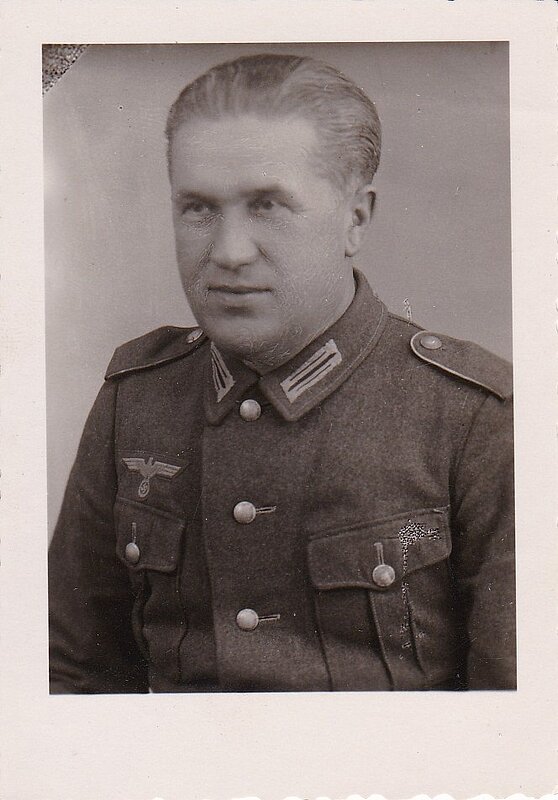
Franz Sitter was a nurse at the Ybbs psychiatric institution in Lower Austria. In the fall of 1940 - the murders had begun in Hartheim a few months earlier - the 38-year-old was transferred to Hartheim along with other nurses at the institution. One of his first tasks was to accompany a transport of patients from the Ybbs asylum to the killing center; several other transports from other psychiatric hospitals followed shortly afterwards.
Sitter didn't know at the beginning why the sick people were being picked up. After he found out about the use of the institution in Hartheim, he tried to leave it as quickly as possible. He demanded from Dr. Rudolf Lonauer, the “medical director” of the killing center, to be transferred back to Ybbs. Despite financial advantages in Hartheim and the threat of conscription into the Wehrmacht, which Lonauer pointed out to him, Sitter persisted in his demand. He could not reconcile his stay in Hartheim with his conscience. In fact, Sitter was allowed to return to Ybbs a short time later.
In the spring of 1941 he was drafted into the Wehrmacht and subsequently worked in various medical units on Austrian territory, including for a while in the reserve hospital in Mauer-Öhling near Amstetten. In 1943 he was transferred to the front and became a prisoner of war. After the war he worked again as a nurse in Ybbs until 1967, he died in 1980. Despite his admirable courage, Franz Sitter did not speak about his actions during the Nazi era until his death; his life story only became known in the course of historical research and is now honored by naming the living area in Attl.